
If you’ve ever walked through Valletta or Mdina and felt that warm, sun-soaked charm, you already understand the appeal of Mediterranean interior design Malta style homes. It’s a look built on natural stone, warm colours, and airy layouts, and it fits Maltese homes almost better than anywhere else. Here’s the thing, Malta’s own architecture already gave this style a head start. This guide walks you through exactly how to bring it into your home, room by room.
What Is Mediterranean Interior Design? (And How Malta’s Version Differs)
Mediterranean interior design is a style built around natural materials, warm neutral tones, and open, breathable spaces. Think white or cream walls, terracotta accents, wrought iron details, and furniture that feels lived-in rather than showroom-perfect. It draws from coastal regions across Italy, Greece, Spain, and Malta.
Most people miss this part though: Malta’s version isn’t just a copy of the wider Mediterranean look. It’s shaped by centuries of specific local history.
Core Principles of Mediterranean Design
The style rests on a few simple ideas:
- Natural materials first — stone, wood, terracotta, and iron over plastic or laminate
- Light, warm palettes — whites and creams as a base
- Texture over pattern — rough plaster, exposed stone, woven textiles
- Indoor-outdoor flow — courtyards, terraces, and big windows
Mediterranean Style vs. Traditional Maltese Style — Comparison Tabl
| Feature | General Mediterranean Style | Traditional Maltese Style |
|---|---|---|
| Main building material | Varies by region (clay, stucco) | Globigerina limestone (“franka” stone) |
| Signature architectural feature | Terracotta roofs, arches | Gallarija (enclosed wooden balcony) |
| Historical influence | Roman, Moorish, Spanish colonial | Baroque, Arab/Ottoman, Sicilian, British |
| Tile tradition | Andalusian ceramic tiles | Maltese patterned cement tiles |
Why Mediterranean Design Suits Malta’s Climate and Architecture
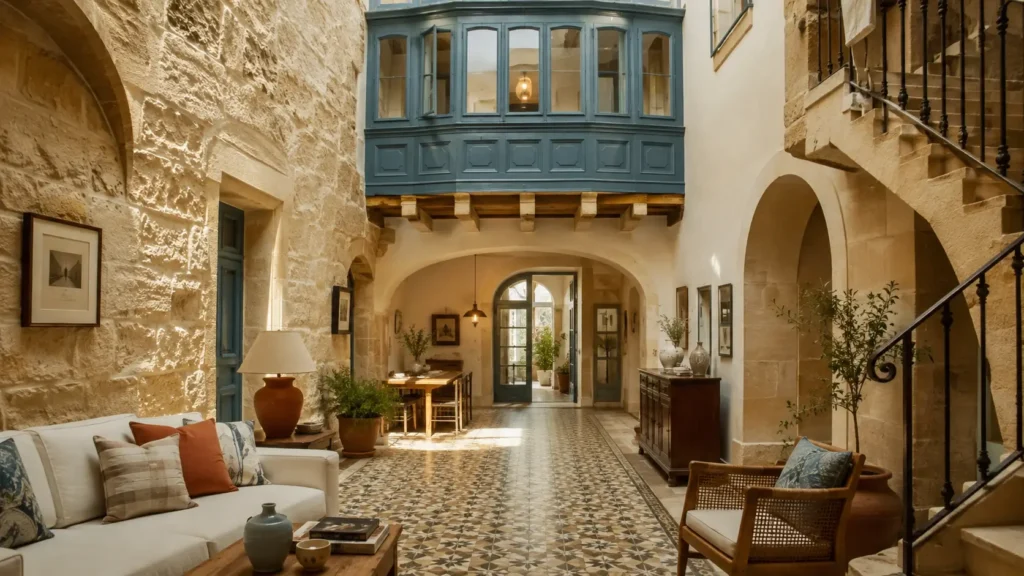
Malta’s building tradition wasn’t designed around trends. It was designed around survival in a hot, dry climate. That’s exactly why Mediterranean interior design Malta homes feels so natural here rather than forced.
Thermal Mass, Limestone Walls & Natural Cooling
Thick limestone walls carry real thermal mass. That means they absorb heat slowly during the day and release it slowly at night, which helps stabilise indoor temperature. Many older Maltese townhouses also use central courtyards or internal light shafts that support cross-ventilation. This isn’t decoration for its own sake, it’s a passive cooling system that predates air conditioning by centuries.
Historical Influences: Baroque, Arab/Ottoman, Sicilian, British
Maltese architecture carries fingerprints from several eras. The Knights of St. John brought Baroque grandeur, visible in Valletta and buildings like St John’s Co-Cathedral. Arab and Ottoman influence gave us the mashrabiya-inspired gallarija and patterned tile traditions. Sicilian building customs shaped stonework techniques, and the British colonial period (1800 to 1964) added civic and defensive architecture. Layer all of that together, and you get a style that’s genuinely one of a kind.
The Mediterranean Colour Palette for Malta Homes
If you only remember one thing from this guide, remember the palette. A true Mediterranean colour palette for Malta homes usually includes:
- Whites and creams as the dominant base
- Terracotta and ochre for warmth
- Sea-blue and olive green as accent colours
- Honey-gold tones echoing local limestone
Whites and Terracottas & Ochres
White walls aren’t just a style choice. They reflect heat and brighten interiors that often have smaller windows for privacy. Pair that with terracotta pots, floor tiles, or accent walls, and you get warmth without overwhelming a small room.
Sea-Blue and Green Accents
A blue front door, green shutters, or a few olive-toned cushions bring in colour without breaking the calm, neutral base. This mirrors the colours you’ll see on gallarija balconies across Valletta and the Three Cities.
Key Materials in Maltese-Mediterranean Interiors
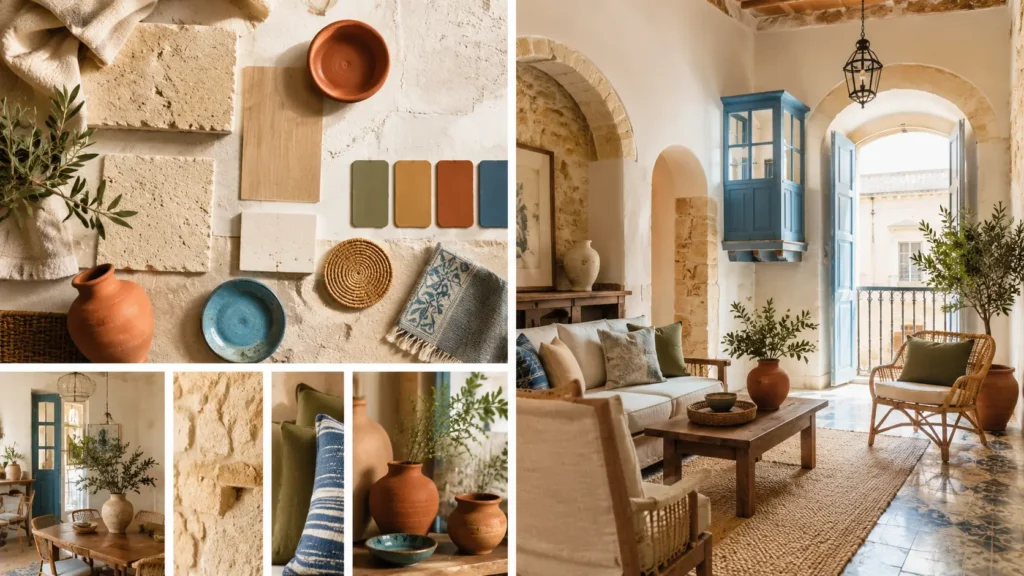
Globigerina Limestone Walls & Flooring
Globigerina limestone is the honey-coloured stone behind almost every historic Maltese building. Indoors, exposed limestone walls create instant texture and warmth, and limestone flooring keeps rooms cool underfoot during summer.
Maltese Patterned Cement Tiles
These tiles trace back to Ottoman mosaic traditions, adapted into Maltese townhouses roughly 300 years ago. They work beautifully in kitchens, hallways, and bathrooms as a statement floor.
Wrought Iron, Rattan & Wood
Wrought iron light fixtures, railings, and furniture legs add that slightly rustic edge. Rattan or wicker seating keeps things light and breathable, which matters in Malta’s warm climate.
Signature Architectural Features to Highlight Indoors
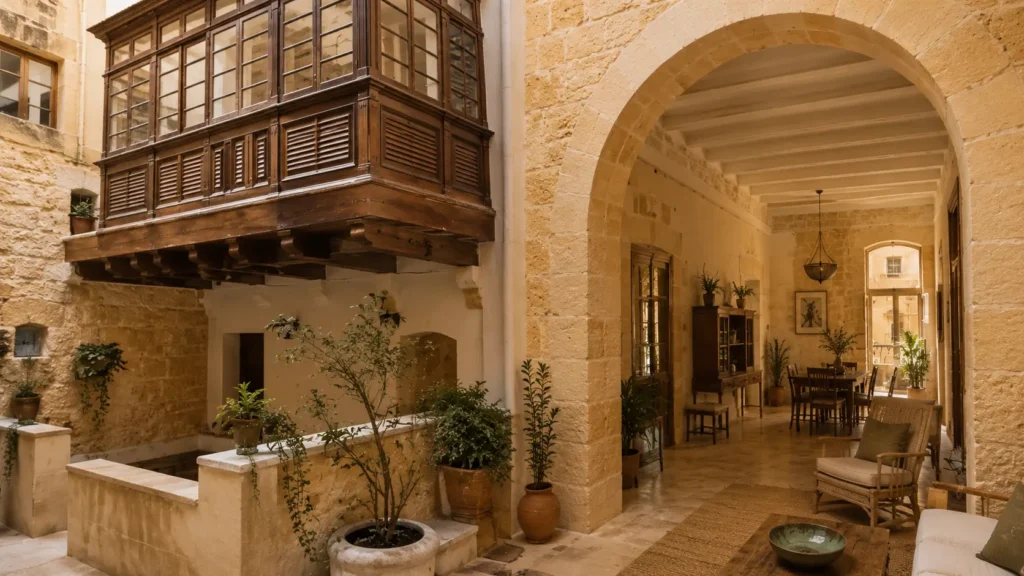
The Gallarija (Enclosed Wooden Balcony) as a Design Feature
The gallarija is Malta’s most recognisable architectural feature, an enclosed wooden balcony believed to descend from the Arab mashrabiya. Originally, it let residents watch the street while staying private, and it also improved airflow. Indoors, you can echo this with timber slat screens, glazed room dividers, or simply painting a feature wall in classic gallarija colours like faded green or rust red.
Exposed Stone Walls and Archways
Leaving one wall in raw limestone, or adding a rounded archway between rooms, brings texture without needing accessories.
Courtyards and Internal Light Wells
If your property has one, don’t cover it up. A small internal courtyard is a genuine Mediterranean design feature, not an afterthought.
Room-by-Room Mediterranean Design Ideas for Malta Homes
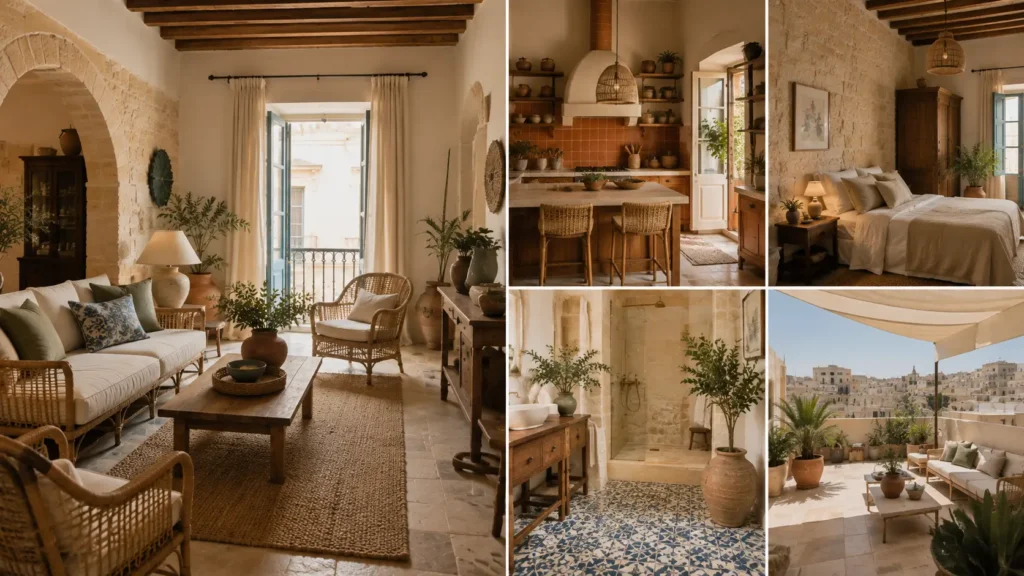
Here’s a quick breakdown for every room in the house:
- Living room — natural sofas, a limestone or terracotta feature wall, wrought iron lighting
- Kitchen — open shelving, stone countertops, terracotta pots for herbs
- Bedroom — linen bedding, warm wood furniture, muted wall tones
- Bathroom — patterned cement tiles, natural stone basins
- Outdoor terrace — gallarija-style shading, rattan furniture, potted Mediterranean plants
Living Room
This is usually the easiest room to transform. Swap in a jute rug, a rattan armchair, and one exposed stone wall, and the whole space shifts instantly.
Kitchen
Terracotta tiles, open wooden shelving, and stone countertops give a kitchen that lived-in Mediterranean feel without looking staged.
Bedroom
Keep it simple: linen sheets, warm wood, and soft, muted colours. Avoid anything too glossy or cold.
Bathroom
Patterned cement tiles on the floor and natural stone on the counters give bathrooms real character.
Outdoor Terrace / Roof
Flat roofs are common across Malta, and many older homes use them as extra living space. Add shade, plants, and simple furniture, and you’ve got a proper Mediterranean terrace.
How to Get the Mediterranean Look in a Modern Maltese Apartment
You don’t need a 300-year-old townhouse to pull this off. Here’s a simple step-by-step approach:
- Start with a white or cream base on your main walls
- Add one natural material feature, like a stone-effect tile or exposed brick panel
- Bring in terracotta accessories, pots, vases, or a rug
- Swap hardware for wrought iron handles or light fixtures
- Add texture with linen and rattan, cushions, curtains, or seating
- Finish with greenery, potted olive trees or herbs work well
Budget-Friendly Swaps
If real limestone isn’t in the budget, stone-effect vinyl flooring, faux terracotta planters, and linen-blend fabrics get you most of the way there.
Restoring a Traditional Maltese Townhouse in Mediterranean Style
Older townhouses come with real charm, but also real rules.
Permits and Heritage Considerations
If your property is scheduled or located in a heritage zone, you’ll likely need approval from the Planning Authority Malta before altering facades or removing original stonework. Organisations like Din l-Art Ħelwa, Malta’s national heritage NGO, also advocate for protecting these features, so it’s worth checking before any major structural changes.
Balancing Modern Comfort with Period Features
Keep original limestone, tiles, and gallarija balconies where possible. Add modern plumbing, insulation, and lighting behind the scenes, so the character stays intact while the home stays functional.
Finding Interior Designers and Materials in Malta
What to Look for in a Local Designer
Look for someone with actual experience restoring or designing around Maltese vernacular features, not just generic Mediterranean styling. Ask to see past projects involving limestone or gallarija restoration specifically.
Where to Source Limestone, Tiles and Furniture
Local stone yards, tile workshops producing traditional patterned cement tiles, and furniture makers working in rattan and wrought iron are your best bet for authentic materials rather than imported imitations.
FAQs
What defines Mediterranean interior design? Warm neutral tones, natural materials like stone and terracotta, wrought iron accents, and airy layouts inspired by coastal regions like Italy, Greece, Spain, and Malta.
How is Maltese interior design different from general Mediterranean style? Maltese design adds local features like globigerina limestone, the gallarija balcony, and patterned cement tiles, shaped by Baroque, Arab, and Sicilian influence.
What colours work best in a Mediterranean-style Maltese home? White and cream bases with terracotta, ochre, sea-blue, and olive-green accents.
Can I apply Mediterranean design in a modern Sliema apartment? Yes. Stone-effect flooring, terracotta accessories, and wooden shutters work without original limestone walls.
What is a gallarija? Malta’s traditional enclosed wooden balcony, used for privacy and ventilation, now a popular design inspiration indoors.
Is Mediterranean interior design expensive? Not necessarily. Budget versions use stone-effect vinyl, terracotta pots, and linen textiles instead of real stone.
Do I need permission to expose limestone walls in a Maltese property? Scheduled or heritage buildings often require Planning Authority approval before facade or structural changes.
Conclusion
Mediterranean interior design style for Malta homes works because it was never really an import, it grew out of the island’s own limestone, climate, and history. Whether you’re restoring a townhouse in Mdina or refreshing a flat in St Julian’s, the same principles apply: natural materials, warm colours, and a nod to features like the gallarija. Ready to bring this look into your own home? Start with one room, one feature wall, and build from there.