
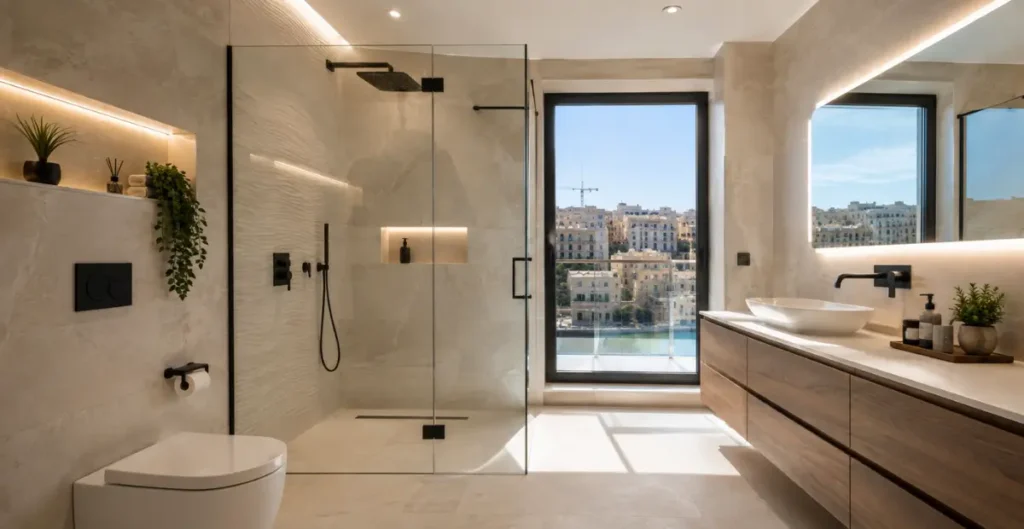
A bathroom renovation in Malta typically costs between €3,000 and €15,000, depending on size and scope, and takes 2 to 6 weeks to finish. This guide walks you through real costs, permit rules, the renovation process, and design ideas for apartments, maisonettes, and rental properties across Malta and Gozo.
Here’s the thing. Most guides either quote a single “average price” that means nothing, or skip the permit question entirely. We’re not doing that here.
The cost depends on three things: the size of the space, the quality of materials, and whether plumbing gets moved. As a rule, expect labour to make up roughly a third to half of your total bill, with fixtures and tiles covering the rest.
For a basic refresh (new tiles, toilet, sink, same layout) usually falls between €3,000 and €5,000. This suits apartments in Gżira, Sliema, or Birkirkara where the plumbing already works fine.
A full refit with better fixtures, a new shower enclosure, and upgraded tiling generally runs €6,000 to €10,000. The layout stays the same, but everything inside gets replaced.
Moving plumbing, changing the footprint, or converting a bathtub into a walk-in shower pushes costs to €10,000 to €15,000 or more. This is the most expensive path because it involves structural and plumbing work, not just finishes.
Labour costs, tile quality, and plumbing complexity drive most of the variation. Older Maltese buildings with outdated pipework often need extra unplanned work once demolition starts, so it’s smart to budget a 10 to 15% contingency on top of your quote.
Not always. This is where a lot of homeowners get confused, so let’s clear it up. If you’re keeping the same layout and same plumbing points, you generally don’t need a full Planning Authority application.
You’ll need approval if you’re moving walls, changing the plumbing route, altering the building’s structure, or affecting a shared area like a stairwell or facade. The Planning Authority (Malta), set up under the Development Planning Act, handles all of this.
Small, non-structural changes usually fall under Minor Works, a simplified process. Bigger changes, like reconfiguring the whole room or extending the footprint, need a Full Development Application, which takes longer to review.
A licensed perit (Malta’s term for architect and civil engineer) is required to submit most planning applications. Before starting any renovation that touches walls or plumbing lines, get a perit to confirm what’s actually needed. This one step saves people from costly rework later.
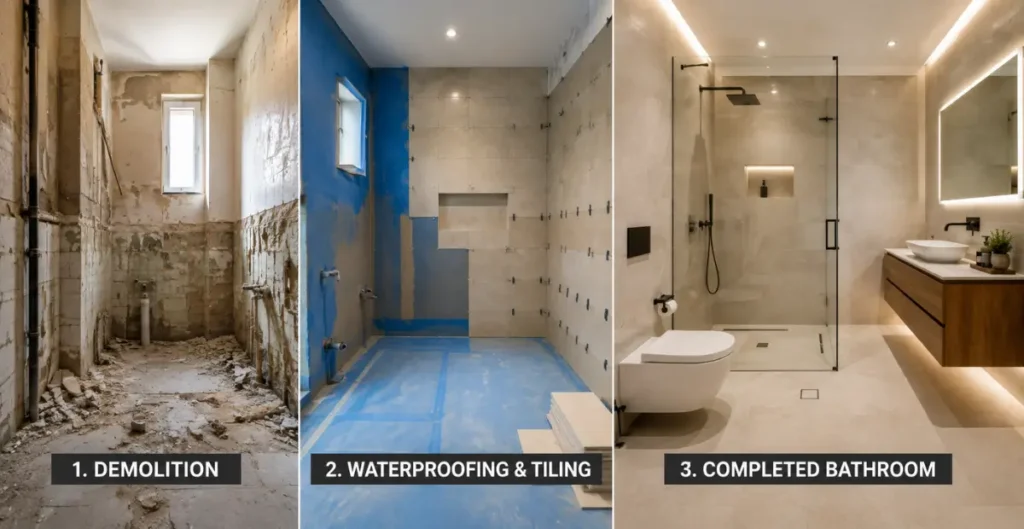
Most successful renovations follow the same five stages, whether it’s a small en-suite or a full family bathroom.
Timelines depend heavily on whether the layout changes.
A basic refresh with no layout changes usually takes 2 to 3 weeks, tiling and drying time included.
A full renovation with new plumbing and a reconfigured layout typically takes 4 to 6 weeks, factoring in permit approval, material delivery, and waterproofing curing time.
A short checklist saves you from mid-project surprises.
Confirm with your perit whether you need Planning Authority approval, and keep a copy of your permit on site during works.
Set your budget, then add 10 to 15% on top for unexpected plumbing or structural issues, especially in older buildings.
Pick tiles, sanitaryware, and fittings before demolition starts. Waiting until mid-project causes delays and rushed decisions.
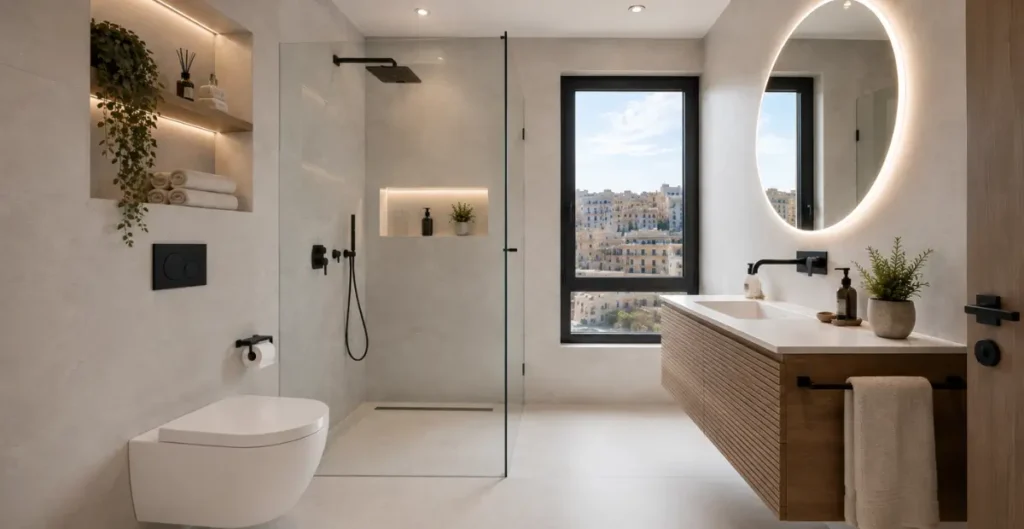
Most Maltese apartment and maisonette bathrooms measure 3 to 6 square metres, so smart layout matters more than square footage.
Wall-hung toilets and vanities free up floor space and make small apartment bathroom renovation projects feel bigger instantly.
A walk-in shower works better than a bathtub in most small Malta bathrooms. It opens up the room visually and suits daily use better than a tub most people rarely use.
For an en-suite bathroom renovation, keep fixtures compact and use large-format tiles to make a narrow room feel less boxed in.
Getting the materials right is where most long-term problems (or long-term savings) come from.
Porcelain tiles handle Malta’s humidity better than natural stone, which can absorb moisture and stain over time. Large-format porcelain also means fewer grout lines, which means less mould risk.
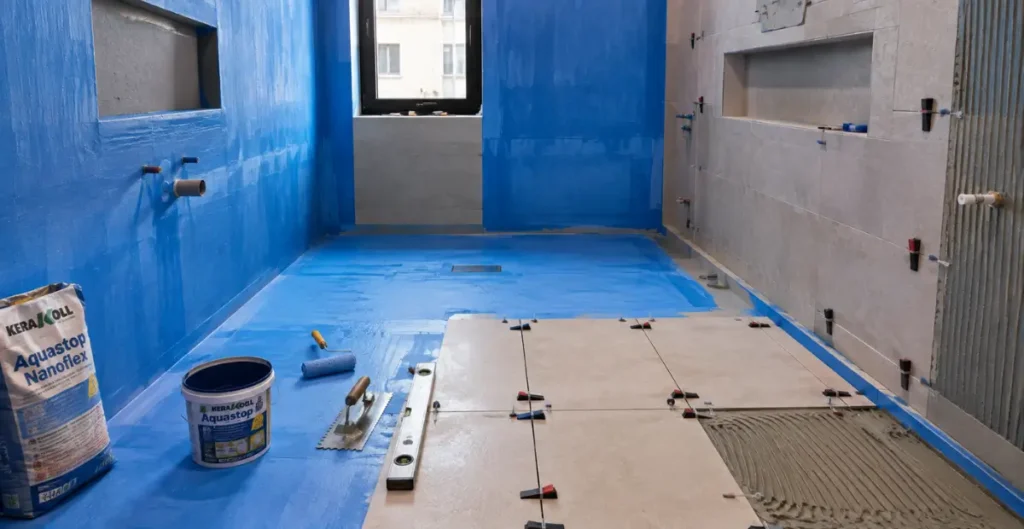
Waterproofing (also called tanking) goes on before tiles, not after. Skipping this step is the single biggest cause of water damage disputes in Malta’s apartment blocks, since leaks travel down into the flat below.
Work with established bathroom fittings suppliers who can guarantee stock availability, since delays on a single fixture can stall an entire project.
If your plumbing works fine and you just want an updated look, a partial refresh (new tiles, fixtures, paint) gets you there for less money and less disruption.
If you’re dealing with water damage, poor layout, or outdated plumbing, a full renovation costs more upfront but avoids repeated patch repairs down the line.
Painting, changing accessories, or swapping a mirror are fine to do yourself.
Plumbing and waterproofing should always go to a licensed professional. A tiny waterproofing mistake can cause thousands of euros in damage to the property below, so this isn’t the place to cut corners.
A modern, well-waterproofed bathroom is consistently one of the higher-return upgrades for Malta property owners. Tenants and buyers notice outdated bathrooms fast, and it directly affects how quickly a unit rents or sells.
For Airbnb and short-let units, durable, easy-clean finishes matter more than luxury extras. Guests judge a listing’s photos on the bathroom almost as much as the bedroom.
Ask for a written quote broken down by labour and materials, ask who handles the permit process, and ask for photos of similar past projects.
Working with an interior designer alongside your contractor helps avoid layout mistakes and keeps material choices cohesive, rather than picking tiles and fixtures separately and hoping they match.
How much does a bathroom renovation cost in Malta?
A basic refresh runs €3,000 to €5,000, a mid-range refit €6,000 to €10,000, and a full renovation with a new layout €10,000 to €15,000 or more.
Do I need a permit to renovate my bathroom in Malta?
Not always. Like-for-like renovations usually don’t need one. Moving walls or plumbing typically requires Planning Authority approval through a licensed perit.
How long does a bathroom renovation take in Malta?
A small refresh takes 2 to 3 weeks. A full renovation with new plumbing takes 4 to 6 weeks.
Can I renovate my bathroom myself in Malta?
Cosmetic work is fine to DIY. Plumbing, electrical work, and waterproofing need a licensed professional.
Does renovating a bathroom increase property value in Malta?
Yes. A modern, properly waterproofed bathroom is one of the higher-ROI upgrades for Malta property, especially for rental and short-let units.
A bathroom renovation in Malta doesn’t have to be confusing once you know the real costs, the permit rules, and the process. Whether you’re refreshing a small apartment bathroom in Gżira or planning a full renovation project for a rental property, the right prep saves you time and money.
Ready to get started? Reach out for a free consultation and quote for your bathroom renovation.